
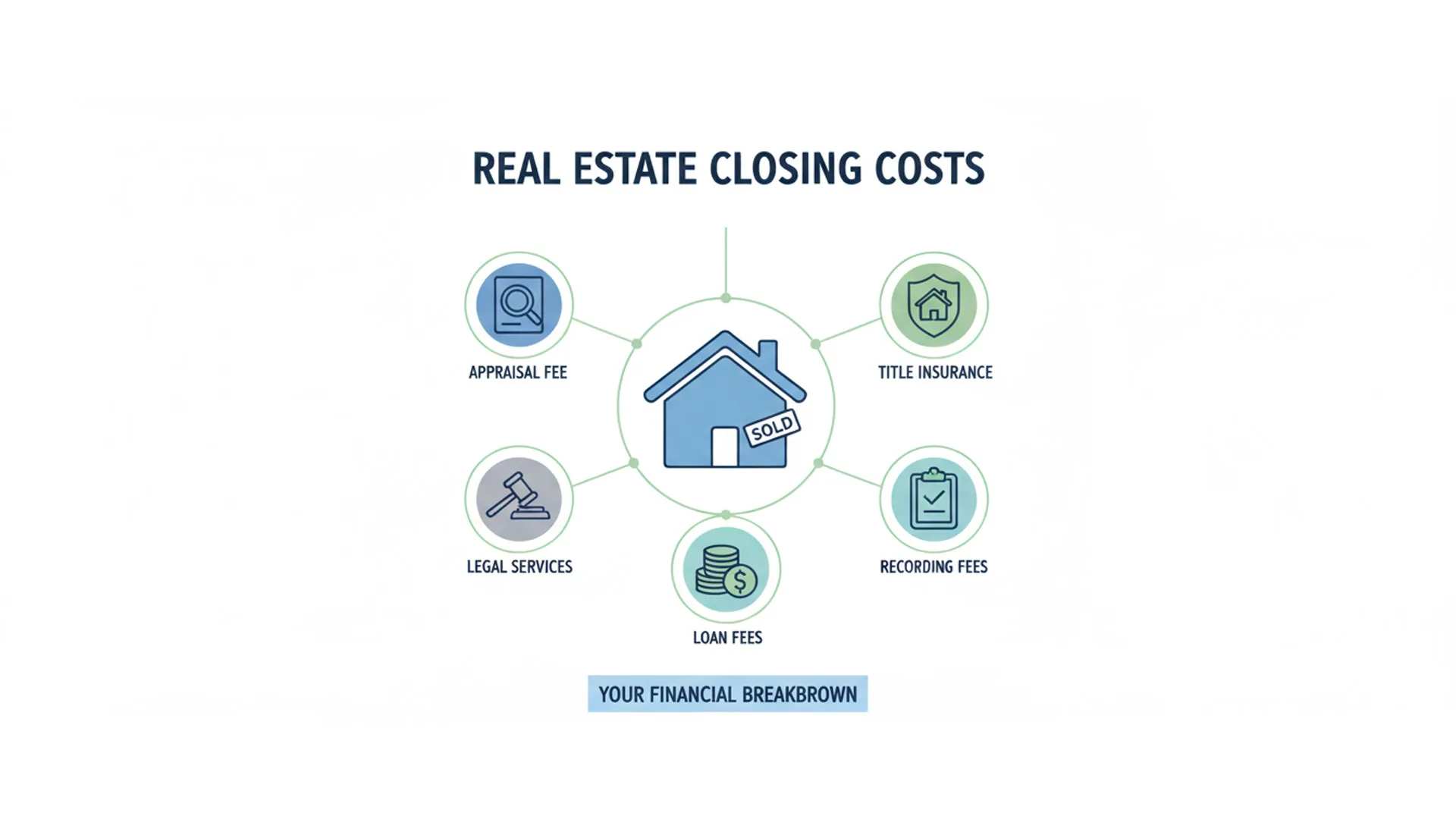
Short answer: Most Utah buyers pay roughly $4,500 to $12,000 in lender and title fees, about 1% to 3% of the price. Add prepaid property taxes, homeowners insurance and escrow reserves, and total cash due at closing (not counting your down payment) usually lands between 2% and 5% of the purchase price.
Buying a home in Utah involves more than just the down payment. Counting prepaid property taxes, insurance and escrow reserves, total cash due at closing typically runs 2% to 5% of your home's purchase price, meaning on a $450,000 home you could bring $9,000 to $22,500 to closing on top of your down payment.
This comprehensive guide breaks down every closing cost you'll encounter when buying a home in Utah, plus strategies to reduce or eliminate many of these fees.
What Are Closing Costs?
Closing costs are the fees and expenses you pay when finalizing your mortgage. They're separate from your down payment and cover services like appraisals, title insurance, and loan processing.
Average Closing Costs in Utah
According to recent data, Utah home buyers pay an average of $4,500 to $12,000 in closing costs, depending on the home price and loan type. Here's the breakdown:
- Loan origination fee: 0.5% - 1% of loan amount ($2,250 - $4,500 on a $450,000 loan)
- Appraisal fee: $400 - $600
- Home inspection: $300 - $500
- Title search and insurance: $1,000 - $2,000
- Escrow fees: $500 - $1,000
- Recording fees: $50 - $150
- Credit report fee: $25 - $50
- Survey fee: $300 - $500 (if required)
Utah-Specific Closing Costs
Utah has some unique aspects when it comes to closing costs:
Property Taxes
Utah property tax rates average about 0.55% of the home's assessed value - lower than the national average. You'll typically prepay 2-6 months of property taxes at closing.
Title Insurance
In Utah, title insurance rates are regulated by the state. Expect to pay approximately $3.50 per $1,000 of the purchase price for owner's title insurance.
Attorney Fees
Unlike some states, Utah does not require an attorney at closing. This can save you $500-$1,500 compared to states that mandate legal representation.
Who Pays Closing Costs in Utah?
In Utah, closing costs are typically split between buyer and seller:
Buyer Usually Pays:
- Loan origination fees
- Appraisal and inspection fees
- Lender's title insurance
- Prepaid property taxes and insurance
- Recording fees
Seller Usually Pays:
- Real estate agent commissions
- Owner's title insurance (often negotiable)
- Transfer taxes (Utah has no transfer tax!)
- Their own closing costs
How to Reduce Your Closing Costs
1. Negotiate Seller Concessions
Ask the seller to contribute toward your closing costs. In Utah's market, sellers may agree to pay 2-3% of the purchase price toward your costs.
2. Compare Lenders
Get quotes from at least 3 lenders. Loan origination fees and points can vary significantly, potentially saving you thousands.
3. Use Down Payment Assistance Programs
Many Utah programs cover closing costs in addition to down payments:
- Utah Housing Corporation FirstHome: Up to 6% assistance
- Davis County: Up to $50,000 in assistance
- Utah County Loan to Own: Up to $40,000
4. Close at End of Month
Closing near the end of the month reduces prepaid interest charges.
5. Ask About No-Closing-Cost Loans
Some lenders offer loans with no closing costs in exchange for a slightly higher interest rate. This can make sense if you plan to refinance or sell within a few years.
First-Time Buyer Closing Cost Programs in Utah
Utah offers several programs specifically designed to help with closing costs:
Utah Housing Corporation Programs
- FirstHome Loan: Up to 6% of the loan amount (capped at $27,500) for down payment and closing costs
- FHA/VA Mortgage and HFA Advantage: The same assistance, open to repeat buyers too
- Deferred option: Up to 3.5% with no monthly payment, repaid when you sell or refinance
Local Government Programs
- Own in Salt Lake County: Up to $20,000 as a deferred loan, repaid at sale or refinance
- South Jordan: 7.5% of purchase price or $20,000, whichever is less, forgivable over 10 years
- West Valley City: Up to $14,999 grant (confirm current terms with the city)
- Midvale: $25,000 standard, $30,000 for Midvale residents and public-entity employees, forgivable over 5 years
Sample Closing Cost Breakdown
Here's what closing costs might look like on a typical Utah home purchase:
Purchase Price: $450,000
Loan Amount: $427,500 (5% down)
- Loan origination (1%): $4,275
- Appraisal: $500
- Home inspection: $400
- Title insurance: $1,575
- Escrow fee: $750
- Recording fees: $100
- Credit report: $35
- Prepaid property taxes (3 months): $619
- Prepaid homeowners insurance (1 year): $1,200
- Prepaid interest (15 days): $890
Total Estimated Closing Costs: $10,344
What to Expect at Closing
Three days before closing, you'll receive a Closing Disclosure that itemizes every cost. Review it carefully and compare it to your Loan Estimate. Ask questions about any fees that seem higher than expected.
At closing, bring:
- Government-issued photo ID
- Cashier's check or wire transfer confirmation for closing costs
- Proof of homeowners insurance
Closing Costs When You Refinance in Utah
Refinance closing costs are different from purchase closing costs — smaller in some ways, larger in others. If you bought in 2021–2023 and are watching rates, here''s what the cost side of a refinance looks like.
What you''ll actually pay
A typical Utah refinance runs $3,500–$8,000 in closing costs, depending on your loan balance and which fees apply. No agent commissions. No owner''s title policy.
| Fee | Typical Range |
|---|---|
| Loan origination fee | $0 – $3,000 |
| Appraisal | $500 – $800 |
| Title search & lender''s title insurance | $400 – $800 |
| Settlement / escrow fee | $300 – $600 |
| Recording fees | $50 – $100 |
| Prepaid mortgage interest | $400 – $1,200 |
| Typical Total | $3,500 – $8,000 |
The break-even calculation
Break-even = Closing costs ÷ Monthly payment reduction
Pay $5,000 to close and save $200/month — you break even in 25 months. If you''re staying longer than that, the refinance makes sense. Planning to sell in 18 months? It doesn''t.
| Closing costs | Monthly savings | Break-even |
|---|---|---|
| $5,000 | $150/mo | 33 months |
| $5,000 | $250/mo | 20 months |
| $7,000 | $300/mo | 23 months |
| $4,000 | $200/mo | 20 months |
No-closing-cost refinance
Most lenders will let you refinance with zero upfront costs by rolling closing costs into the loan balance or taking a slightly higher rate (lender credit). Works well if you plan to sell or refi again within 5 years. Trade-off: you pay more interest over the life of the loan.
Utah-specific refinance notes
- No transfer tax — Utah saves you $1,000–$3,000 vs. states like Colorado or California.
- UHC DPA second mortgage — If you used UHC DPA to buy, you''ll need to coordinate that second lien when you refinance. Manageable, but confirm with your lender upfront.
- Appraisal waivers — Many conventional refinances qualify for Fannie/Freddie appraisal waivers, saving $500–$800. Ask your lender if you likely qualify.
- Cash-out vs. rate-and-term — Cash-out refinances carry a slightly higher rate. If you just want a lower payment, rate-and-term is simpler.
Next Steps
Understanding closing costs is crucial for budgeting your home purchase. Want to know exactly what you'll pay? Schedule a free consultation with First Home Utah - we'll review your specific situation and identify programs that can help reduce your closing costs.
We've helped many Utah buyers navigate closing costs and find assistance programs they didn't know existed. Let us do the same for you.