
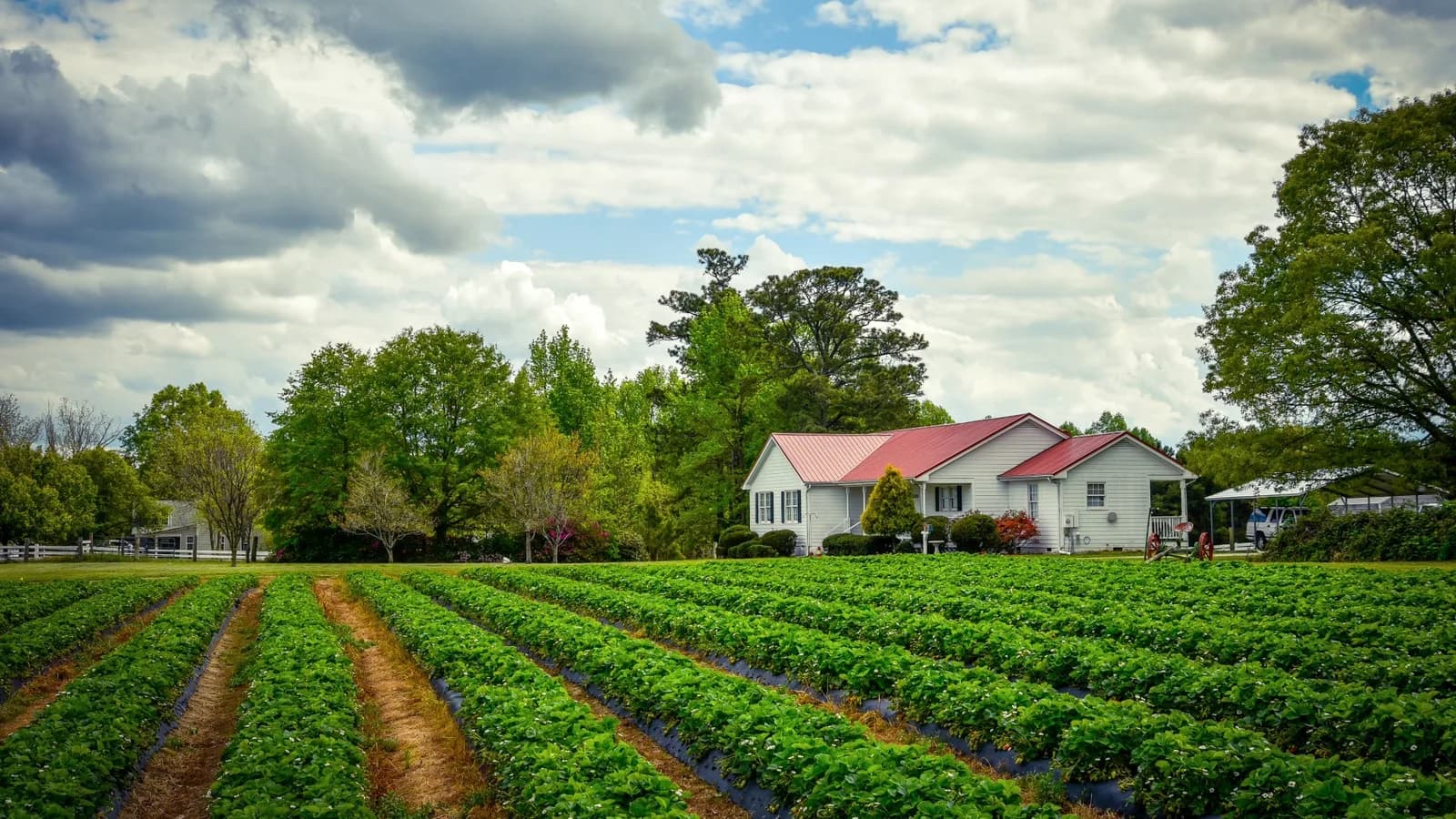
Everyone talks about FHA and VA loans. The one that gets skipped is USDA, and that is a shame, because for the right buyer in the right Utah town it is the closest thing to a free pass into homeownership. Zero down. Rates that compete with anything else out there. The catch is that the property has to be in an area the USDA calls rural, and rural does not mean what most people think.
Here is the honest version of how USDA loans work in Utah, who they fit, and where they actually let you buy.
What a USDA loan actually is
The program is run by the U.S. Department of Agriculture through its Rural Development arm. The one almost every buyer uses is the Single Family Housing Guaranteed Loan. You get the loan through a regular lender, and the USDA backs it, which is what makes 100% financing possible.
The headline feature is the one that matters most when you are short on savings: no down payment. On a $360,000 home, an FHA buyer needs about $12,600 down. A USDA buyer needs zero. That gap is the entire reason this program exists.
The fees, explained without the spin
USDA loans are not free of fees, and any article that pretends otherwise is selling you something. There are two:
- Upfront guarantee fee of 1% of the loan amount. On a $360,000 loan that is $3,600, and you can roll it into the loan instead of paying it at closing.
- Annual fee of 0.35% of the remaining balance, split into 12 payments and added to your monthly mortgage. On that same balance it works out to roughly $105 a month at the start, and it drops a little every year as you pay the loan down.
Compare that to FHA, where the monthly mortgage insurance runs 0.55% and never goes away on most loans. USDA is the cheaper carry of the two, and it is dramatically cheaper than paying PMI on a low-down conventional loan. The fee structure above is in effect through 2026.
The two rules that decide everything
USDA eligibility comes down to two questions. Get both right and you are in.
1. Is the house in an eligible area?
This is where people count themselves out too early. USDA eligible does not mean farmland in the middle of nowhere. It means outside the dense urban cores, and a huge share of Utah qualifies. Towns on the edges of the Wasatch Front, plus most of the state beyond it, are fair game.
Places that have historically qualified, in whole or in part, include Tooele and Grantsville, much of Cache Valley outside central Logan, Box Elder County towns like Tremonton, the Sanpete and Sevier valleys, Uintah Basin towns like Vernal, and pockets around Cedar City and the smaller communities ringing St. George. Even some of the fast-growing suburbs people assume are too built-up still sit inside eligible boundaries.
Boundaries get redrawn as towns grow, so never assume. Pull up the official USDA property eligibility map and type in the exact address before you fall in love with a house. That map is the only answer that counts.
2. Is your household income under the limit?
USDA is built for moderate-income buyers, so there is a ceiling. Your total household income has to land at or below 115% of the area median income for the county, and the limit counts everyone in the home who earns, not just the people on the loan.
The limits change by county and get updated annually, and the program allows deductions for things like dependents and childcare that can bring a household back under the line even if the raw number looks high. Rather than trust a figure you read on a blog, look up your county on the USDA income eligibility tool or have a lender run it. That is the one number you do not want to guess on.
What else you need to qualify
- Credit. The USDA does not set a hard minimum, but most lenders want to see around 640 to move you through the faster automated underwriting. Below that you can still qualify, it just takes more documentation.
- Primary residence only. No rentals, no vacation homes, no flips. You have to live there.
- A property that meets standards. The home has to be safe, sound, and sanitary, which an appraisal confirms. Most move-in-ready homes clear this easily.
USDA vs FHA vs VA: which fits you
If you served in the military, a VA loan almost always wins on cost, so start there. If you are buying in Salt Lake City, Provo, Ogden, or the dense parts of the valley, the property will not qualify for USDA and FHA becomes your low-down option. But if you are an income-eligible buyer looking at a home in one of Utah''s smaller towns or outer suburbs, USDA is often the single cheapest way in, because it pairs zero down with a lower monthly fee than FHA.
For a fuller side-by-side, our FHA guide and VA loan breakdown walk through those programs in detail.
How to find out if you qualify in 10 minutes
- Check the address on the USDA property eligibility map.
- Look up your county''s income limit on the USDA income tool.
- If both check out, talk to a lender who actually closes USDA loans, since not all of them do.
USDA loans are one of the most overlooked tools for first-time buyers in Utah, mostly because the word rural scares people off a program they would sail through. If you are open to a home outside the busiest parts of the valley, it is worth ten minutes to find out.
Not sure where to start? Reach out and we will help you check both boxes and point you to a lender who knows the program.