The short answer: the minimum down payment on a $300,000 home in Utah is about $10,500 with an FHA loan (3.5% down). Add closing costs of roughly $6,000 to $15,000, and most buyers need around $19,500 in cash to close, before any help from the seller or a down payment assistance program.
That help is the good news. At this price, the right program can cover the entire down payment and a chunk of the closing costs, which can bring what you bring to closing down to a few thousand dollars. Here's the math, then how to cover it.
What $300,000 buys in Utah
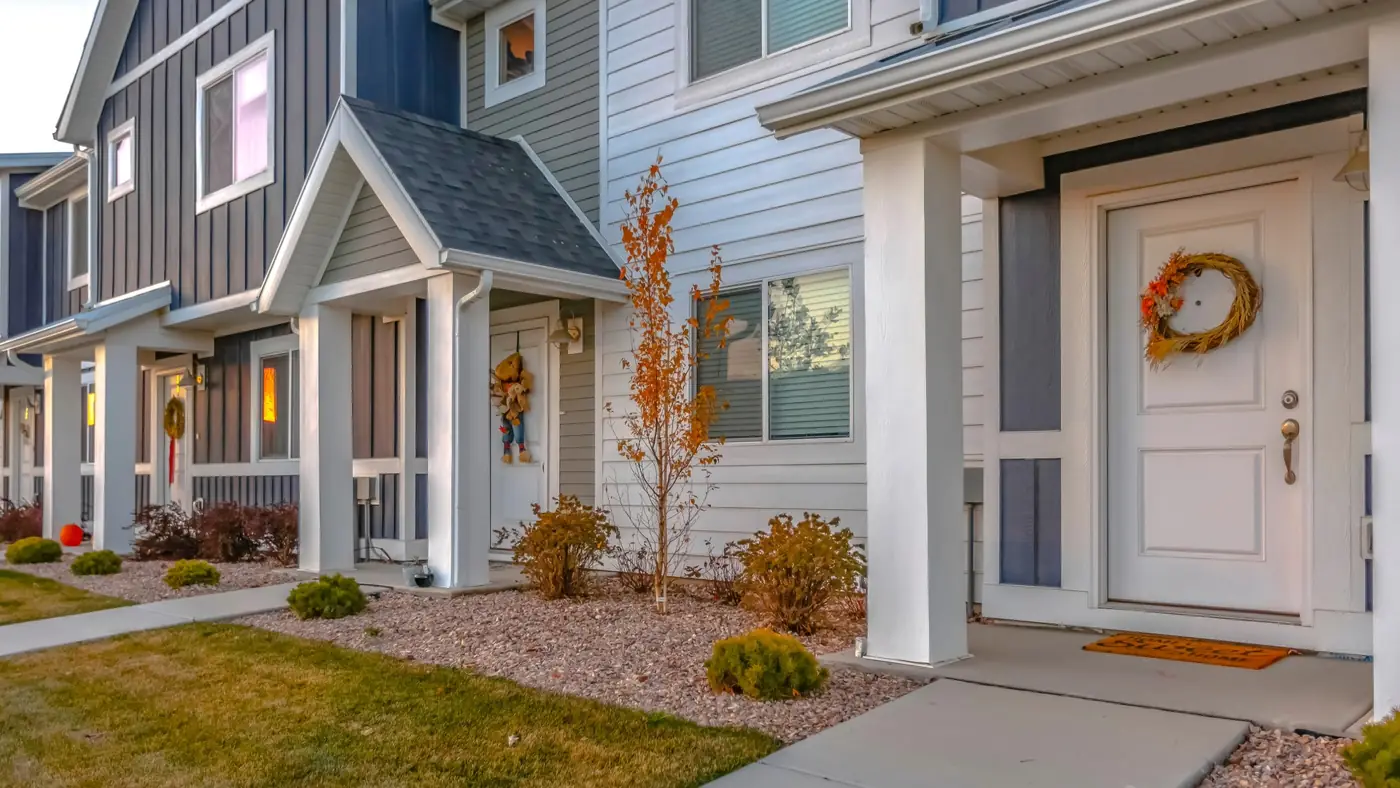
First, a reality check. The median sale price in August 2026 was $441,000 in Weber County, $468,700 in Tooele, $523,000 in Davis, $524,000 in Utah County and $555,000 in Salt Lake County, according to the Utah Association of REALTORS. At $300,000, you're mostly looking at a condo or townhome, with smaller, older single-family homes in the more affordable parts of Weber and Tooele counties.
That's a good place to start. A first home doesn't have to be a forever home; it's the step that gets you out of renting and starts building equity you can put toward the next one. If you're weighing a condo or townhome, this post covers what to check before you buy, like the HOA's finances and FHA approval.
How much do you need for a down payment on a $300,000 house?
It depends on the loan. Here's the minimum for each, with the estimated monthly payment at 7%:
| Loan | Down payment | Monthly payment (est.) |
|---|
| VA (eligible veterans and service members) | $0 | Varies, no monthly mortgage insurance |
| USDA (eligible rural and suburban areas) | $0 | Varies |
| Conventional, 3% (generally first-time buyers) | $9,000 | about $2,332 |
| FHA, 3.5% | $10,500 | about $2,357 |
| Conventional, 5% | $15,000 | about $2,289 |
| Conventional, 20% (no mortgage insurance) | $60,000 | about $1,859 |
Payments include estimated property tax (0.55% a year), $125 a month for homeowners insurance, and mortgage insurance where it applies. HOA dues aren't included, and for a condo or townhome they usually add $150 to $300 a month.
FHA is a popular choice for first-time buyers because it's more forgiving on credit (a 580 score can qualify for 3.5% down). If your credit is strong, a 3% or 5% conventional loan can cost a little less each month. See conventional vs. FHA for the full comparison.
Don't forget closing costs
Closing costs in Utah typically run 2% to 5% of the price, so $6,000 to $15,000 on a $300,000 home. That covers lender fees, title insurance, prepaid property taxes and insurance, and setting up your escrow account. The Utah closing costs breakdown goes line by line.
Two things can shrink that number:
- Seller concessions. You can ask the seller to pay part of your closing costs as part of your offer. FHA allows the seller to contribute up to 6% of the price ($18,000 at $300,000), and conventional loans with less than 10% down allow up to 3% ($9,000). Whether a seller agrees depends on the market and the home.
- Down payment assistance. Most programs below can be used for closing costs as well as the down payment.
Put together, an FHA buyer at $300,000 with closing costs around 3% needs about $19,500 before any seller help or assistance: $10,500 down plus about $9,000 in closing costs.
Try different down payments and loan types below. The calculator starts at $300,000 on FHA with 3.5% down and today's rate.
How much should you make to afford a $300,000 house?
Lenders look at your debt-to-income ratio (DTI): all your monthly debt payments, including the new house payment, divided by your gross monthly income. On a $300,000 FHA purchase at 7%, with no other debts:
- About $63,000 a year is roughly the lowest income most lenders will approve (a 45% DTI).
- About $79,000 a year keeps the payment at a comfortable 36% of your income.
Car payments, student loans and credit card minimums all push those numbers up. With 20% down, the payment drops to about $1,859, and the income needed falls to roughly $50,000 to $62,000.
Can I afford a $300K house on a $50K salary?
Usually not with a small down payment. The FHA payment would be about 57% of a $50,000 income, past what lenders approve. On $50K, the FHA lender ceiling is about $235,000, and a comfortable budget is closer to $185,000. With 20% down ($60,000), $300,000 becomes possible, at about 45% of your income.
Can I afford a $300K house on a $70K salary?
Yes, for most buyers. The FHA payment is about 40% of your income: above the comfortable line, but under what lenders approve. How Much House Can I Afford on $70K in Utah? runs those numbers in detail.
Can I afford a $300K house on a $100K salary?
Comfortably. The FHA payment is about 28% of your income, which leaves plenty of room for other debts or a higher price.
How down payment assistance covers it
One word of caution first: don't build your plan around getting assistance. Funding runs out, many programs are first-come, first-served, and rules change. Make sure the numbers work on your own. If you then qualify for a program, it can make a big difference, and $300,000 is exactly the price range these programs are built for.
Utah Housing Corporation (statewide)
Utah Housing's assistance is a second mortgage that comes in two versions, both capped at $27,500:
- Traditional: up to 6% of your first mortgage. On a $300,000 FHA purchase, that's about $17,700, enough for the full $10,500 down payment plus about $7,200 toward closing costs. It's a 30-year loan at 1% above your first mortgage rate (8% at most), which adds about $130 a month.
- Deferred: up to 3.5% of your first mortgage, about $10,300, which covers nearly all of the down payment with no monthly payment. Simple interest of 3.5% builds up, and you repay it when you sell or refinance.
Income limits start at $118,000 even in the most limited counties, so most buyers shopping at $300,000 qualify on income. See Utah Housing programs for credit minimums and details.
City and county programs
Local programs are often larger, and many have no monthly payment:
| Program | Area | Up to |
|---|
| Provo Home Purchase Plus | Provo | $60,000 |
| Loan to Own | Most of Utah County | $40,000 |
| Midvale City DPA | Midvale | $25,000 ($30,000 for some residents and public employees) |
| Eagle Mountain Mortgage Assistance | Eagle Mountain | $25,000 |
| Own in Salt Lake County | Participating Salt Lake County cities | $20,000 |
| South Jordan DPA | South Jordan | 7.5% of the price or $20,000, whichever is less |
| Own in Ogden | Ogden | $10,000 |
At $300,000, most of these cover the whole 3.5% down payment, and the larger ones cover closing costs too. The trade-off is lower income limits: most cap household income at 80% of the area median, which in 2026 is about $66,000 to $67,000 for one person and $75,000 to $76,000 for two in Utah, Davis and Weber counties. Eagle Mountain is the exception, at 120% of the median ($143,040 for a family of four). Most also require you to put in some of your own money, often $500 to $1,000, and some ask for more: Own in Salt Lake County has you cover half of the required down payment yourself. Many are also limited to first-time buyers with a minimum credit score. Davis County's $50,000 program is out of funds until July 1, 2027.
Check your county and household size on the Utah income limits page, or see every program on the Utah down payment assistance page.
Buying new construction? Look at SB240
A new $300,000 townhome may qualify for SB240, Utah's first-time buyer assistance for new construction: up to $20,000 as a 0% deferred loan. When you sell or refinance, you repay the lesser of the assistance or 50% of your equity. It requires a Utah Housing first mortgage, a price under $450,000, and 12 months of Utah residency, and it's available while funds last.
Most buyers end up using one program, not several. Each one limits what else can sit behind your first mortgage; here's why. The practical question is which single program covers the most for your address and income.
Check which programs you qualify for
Every number here is an estimate. Your real down payment, closing costs and assistance depend on the loan, the seller, your county and your household income. As a REALTOR I don't originate loans, but I work with local lenders who know these programs well, and I can help you sort out which ones fit before you start touring.
The fastest next step is a short call. Check which programs you qualify for, free, and we'll figure out how much of that $10,500 (and your closing costs) you can get covered.